BUK Protocol
The launchpad for AI builders & travel service providers.
 blokminers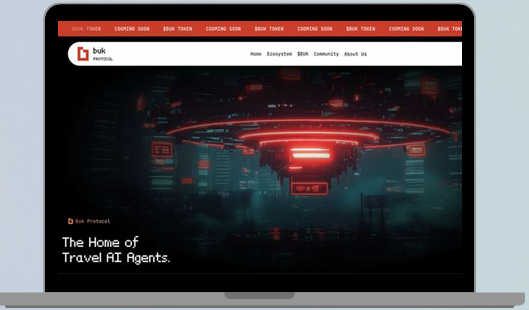
The Challenge
AI builders and travel service providers lacked a purpose-built infrastructure to launch, distribute, and monetise their products within the travel ecosystem. General-purpose developer platforms did not understand travel domain requirements, while existing travel technology stacks were legacy systems hostile to modern AI integration. There was no neutral, open launchpad that connected innovation in AI with the distribution networks of established travel industry players.
Our Approach
BUK Protocol was designed as an open infrastructure layer connecting AI product builders with travel service providers through a standardised integration protocol. We created tooling that dramatically reduced the time and technical complexity required to bring an AI-powered travel product to market, and built marketplace mechanics that gave innovative products instant access to travel distribution channels without requiring bilateral commercial negotiations.
Key Features
BUK Protocol features a developer SDK for rapid AI travel product integration, a marketplace connecting builders with travel service provider distribution networks, standardised API contracts for inventory access and transaction processing, a token-based incentive layer rewarding protocol participation, and a governance framework giving stakeholders a voice in protocol development priorities.
Impact & Results
Early cohorts of AI builders using BUK Protocol reported getting their products to market in a fraction of the time it would have taken building direct integrations with travel inventory systems. Travel service providers gained access to a pipeline of innovative AI-powered tools without internal development investment. The protocol created a network effect where more builders attracted more providers, and vice versa.
What's Next
BUK Protocol is expanding its builder programme with structured grants and mentorship for AI travel startups building on the protocol. Cross-protocol composability with adjacent Web3 infrastructure is planned, enabling BUK-based products to interact with loyalty, identity, and payment primitives from the broader ecosystem. A decentralised governance transition will give protocol stakeholders increasing ownership of its direction.